

What to Expect When Getting Dentures
Silverdale, WAThe Dentures Process
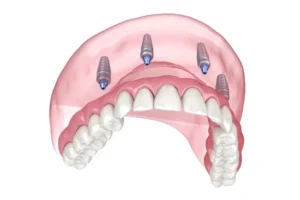
There are different types of dentures, two of which are removable dentures and implant dentures. Removable dentures are a more traditional option that requires the patient to remove them at night when they sleep. Implant dentures are not removable since we attach them directly to the jaw. We will not recommend implant dentures unless the patient is healthy and if the patient does not have any teeth left to use.
In order to determine the best type of dentures for the patient, we will conduct a thorough examination of the patient's teeth and current level of oral health. From there, we will continue through other steps in the process for a patient who is interested in getting dentures. Below is a list of the steps in the process.
1. A dental examination
2. Making the dentures
3. Fitting the dentures
4. Adapting to dentures
Other factors to expect with getting dentures
The dentures that one gets from our office will be a custom fit to the individual's mouth, but may take some time before the individual has complete mastery of the dentures. Dentures also require proper oral hygiene to last as long as possible. However, proper care will not involve typical brushing with toothpaste.
The proper care of dentures will require using a specific type of brush and a liquid solution that does not harm the material of the dentures. The patient will also need to soak the removable dentures in the solution at least every night when the patient sleeps. Since there are different types of dentures, we will go over the most effective care methods for the type of dentures the patient has. We will also recommend the best type of solution for cleaning the dentures and where to get it.
Just because the patient does not have any teeth does not mean the gums cannot get infected. Thus, a patient without teeth needs to brush his or her gums at least twice a day. Using water to rinse the dentures after removing them from the mouth, patients then need to gently brush the gums with toothpaste.
Regular brushing and keeping the dentures clean will help ensure that the patient does not have an infection growing in the mouth. It is important for the patient to also brush the tongue and along the roof of the mouth. While this may take some time for a patient to adjust to, proper oral hygiene is crucial for keeping dentures in the best condition possible.
With proper oral hygiene, patients also need to be careful to avoid dropping the dentures on the counter or ground in the bathroom. While dentures are sturdy, they are not unbreakable. If the patient needs repairs on dentures of any kind, it is crucial to call us and seek assistance. Attempting to repair the dentures without professional experience can result in catastrophic results.
For more information on the denture process and if dentures are the right choice for you, give us a call at (360) 692-6332 to schedule a consultation today.
Questions Answered on This Page
People Also Ask
Definition of Denture Terminology
- Alveolar Bone
The alveolar bone is the bone surrounding the root of the tooth that keeps the tooth in place. - Clasp
A clasp is a device that holds a removable partial denture prosthesis to the teeth. - Denture Base
The denture base is the part of the denture that connects the artificial teeth with the soft tissue of the gums. - Edentulous
Edentulous is a term that applies to people who do not have any teeth. - Periodontal Disease
Periodontal disease is a condition that causes inflammation of the gingival tissues and membrane of the teeth, leading to tooth loss without professional treatment. - Pontic
Pontic is another term for an artificial tooth on a fixed partial denture. - Rebase
Rebase is the process of refitting denture prosthesis by replacing the base material. - Reline
Reline is when a professional resurfaces the surface of the prosthesis with a new base material. - Resin/Acrylic
Resin and Acrylic are resinous materials that can be components in a denture base. - Stomatitis
Stomatitis is the inflammation of the tissue that is underlying a denture that does not fit properly. It can also result from other oral health factors.
Helpful Related Links
- American Dental Association (ADA). Glossary of Dental Terms. 2015
- American Academy of Cosmetic Dentistry® (AACD). Home Page. 2015
- WebMD. WebMD’s Oral Care Guide. 2015
About our business, license, and website security
- Clear Creek Dentistry was established in 2008.
- We accept the following payment methods: American Express, Cash, Check, Discover, MasterCard, and Visa.
- We serve patients from the following counties: Kitsap County.
- We serve patients from the following cities: Silverdale, Poulsbo, Bremerton, Port Orchard, Kingston, and Bainbridge Island.
- Norton Safe Web. View Details
- Trend Micro Site Safety Center. View Details
Related Topics
- Adjusting to New Dentures
- All-on-4 Implants
- Denture Care
- Dentures and Partial Dentures
- Implant Supported Dentures
- Options for Replacing Missing Teeth
- Partial Denture for One Missing Tooth
- Partial Dentures for Back Teeth
- Solutions for Common Denture Problems
- The Process for Getting Dentures
- What Do I Do If I Damage My Dentures
Recent Posts
All-on-4® vs. Dental Bridges vs. Traditional Dentures
Reasons to Consider All-on-4® Teeth Replacement
How Long Does the Procedure for Implant Supported Dentures Take?