
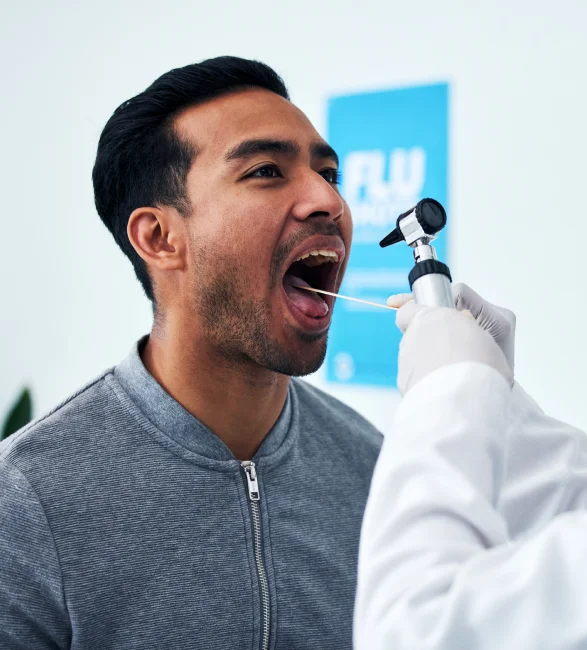
Why Routine Oral Cancer Screenings Matter
A few minutes of attention at each checkup can make a meaningful difference in your long-term health:
- Catch changes early: Oral cancer is much easier to treat when it is detected at an early, localized stage.
- Identify precancerous tissue: Screenings can reveal abnormal cells before they develop into cancer, allowing for earlier intervention.
- Improve treatment outcomes: Early diagnosis often means less invasive treatment, faster recovery, and better survival rates.
- Painless and fast: The exam takes only a few minutes and is included as part of your comprehensive dental checkup.
- Peace of mind: Knowing a trained professional is looking for warning signs twice a year helps ease worry.
- Personalized risk guidance: Our team can share practical ways to lower your risk based on your health history and habits.
Who Is at Higher Risk for Oral Cancer?
Everyone benefits from regular screenings, since oral cancer can affect people who have no known risk factors. However, your risk may be higher if you:
- Smoke cigarettes, cigars, or pipes, or use chewing tobacco or snuff
- Drink alcohol heavily or frequently, especially in combination with tobacco
- Have been exposed to the human papillomavirus (HPV), particularly HPV-16, which is linked to cancers of the throat and back of the tongue
- Spend a lot of time in the sun without lip protection, which increases the risk of lip cancer
- Are over the age of 40, although oral cancer is increasingly diagnosed in younger adults
- Have a weakened immune system or a personal history of head and neck cancer
- Have a diet low in fruits and vegetables
If any of these apply to you, let our team know. We may recommend closer monitoring of specific areas during your visits.
Inside Your Oral Cancer Exam: What Our Dentists Check
An oral cancer screening is simple and comfortable, and most patients barely notice it is part of their checkup. Our dentists follow a systematic approach so no area of your mouth, face, or neck is overlooked. Most screenings come back completely normal. When something does need a closer look, finding it early gives you the widest range of options.
Health and Risk Review
We ask about tobacco and alcohol use, sun exposure, and any symptoms you have noticed, such as persistent sores, hoarseness, or trouble swallowing.
Head, Face, and Neck Exam
Our dentists look for swelling, lumps, or asymmetry in your face, jaw, and neck, and check the skin of your lips for sun damage.
Lymph Node Check
We gently feel the lymph nodes under your jaw and along your neck to check for enlargement or tenderness.
Intraoral Tissue Exam
Using good lighting and a small mirror, we examine your lips, gums, cheeks, tongue (including the sides and underside), floor of the mouth, palate, and the back of the throat.
Hands—on Tissue Evaluation
We gently feel the tissues inside your mouth for any hardened areas, thickening, or unusual texture.
Findings and Next Steps
We share what we found. If an area needs attention, we may recheck it in two weeks, recommend a biopsy, or refer you to a specialist for further evaluation.
Warning Signs of Oral Cancer to Watch For
Between visits, keep an eye out for changes in your mouth. Call our office if you notice any of the following for more than two weeks:
- A sore, ulcer, or irritation that does not heal
- Red, white, or speckled red and white patches on the gums, tongue, or lining of the mouth
- A lump, thickening, or rough spot in the mouth, throat, or on the lips
- Persistent pain, numbness, or tenderness anywhere in the mouth or lips
- Difficulty chewing, swallowing, or moving the jaw or tongue
- A feeling that something is caught in the throat
- Ongoing hoarseness or a change in your voice
- Unexplained bleeding in the mouth
- Loose teeth or a change in how your dentures fit, with no clear cause
These symptoms are often caused by something minor, but they are always worth having checked.
How to Perform a Monthly Oral Self-Exam at Home
A quick monthly self-check helps you notice changes early. Stand in front of a mirror with good lighting and:
- Look at and feel the inside of your lips and cheeks for sores, patches, or lumps.
- Tilt your head back and check the roof of your mouth.
- Stick out your tongue and look at the top, sides, and underside.
- Lift your tongue to view the floor of your mouth.
- Gently feel along both sides of your neck and under your jaw for lumps or tenderness.
If anything looks or feels different, let our team know right away rather than waiting for your next checkup.
Protect Your Health with a Screening at Clear Creek Dentistry
Oral cancer screenings are a simple, powerful way to safeguard your health, and they are part of every routine exam at our Silverdale office. If it has been a while since your last checkup, or you have noticed a change in your mouth that concerns you, our team is here to help. Call us or request an appointment online to schedule your exam and oral cancer screening.
Schedule an Oral Cancer ScreeningFrequently Asked Questions About Oral Cancer Screening
An oral cancer screening is an exam of your mouth, lips, tongue, throat, face, and neck to look for signs of cancer or precancerous tissue. It includes a visual inspection and a gentle hands-on check of the tissues and lymph nodes.
Most adults should be screened at every routine dental checkup, typically every six months. Patients with higher risk factors, such as tobacco use, may benefit from closer monitoring.
No. The screening is painless and takes only a few minutes. It involves looking at and gently feeling the tissues of your mouth, face, and neck.
Yes. At Clear Creek Dentistry, an oral cancer screening is part of every comprehensive dental exam, so you receive this added protection at your routine checkups.
Early oral cancer can appear as a sore that does not heal, a red or white patch, a lump, or a rough or thickened area in the mouth. It is often painless at first, which is why professional screenings are so important.
Most unusual findings are not cancer. We may recheck the area in about two weeks to see if it heals on its own. If it persists, we may recommend a biopsy or refer you to a specialist for further testing.
Yes. While tobacco and alcohol use increase risk, oral cancer can affect people who have never smoked. HPV-related throat cancers are increasingly common in younger adults, which is why regular screenings benefit everyone.
You can lower your risk by avoiding tobacco, limiting alcohol, using lip balm with SPF, eating plenty of fruits and vegetables, talking with your doctor about the HPV vaccine, and keeping up with regular dental checkups.