Cosmetic Dentist
Silverdale, WAUnderstanding Your Desire to Change Your Smile
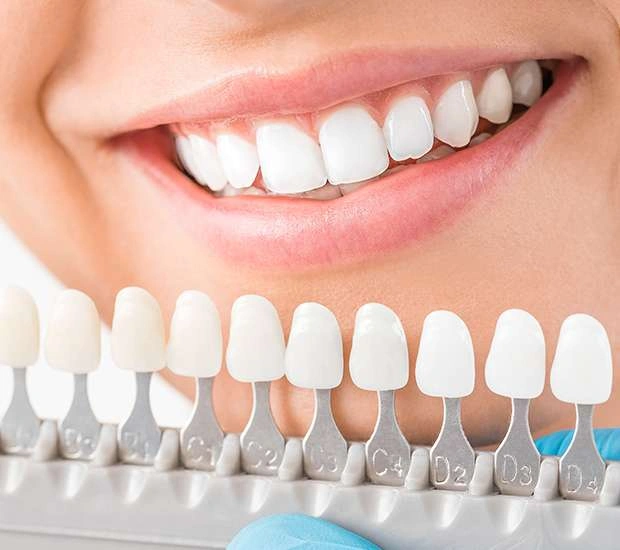
We take the time to get to know each patient and the goals that the patient has for his or her smile. This process often involves correcting a problem with how a particular tooth, or teeth, appear. Thanks to modern dental techniques, we can help patients to accomplish these goals in a painless method that produces dramatic results. Gone are the days where people have to live with a smile that they do not like or are embarrassed to show off. Even people with crooked, damaged, or stained teeth can experience the stunning transformations available when working with Dr. Beck and Dr. Haws.
We work with adults of all ages and commonly hear that older patients feel like it is too late to improve their smile. It is never too late to receive cosmetic dental care. Adults of all ages are delighted to find that there are many ways to restore their damaged teeth and replace missing ones. While, in years past, there may have been very few options available for replacing missing teeth, cosmetic dentistry has opened the door to solutions that are permanent, durable, and natural looking. To find out what procedures will work best for you, call (360) 692-6332 and schedule a consultation.
According to the American Association of Cosmetic Dentistry, the top cosmetic dental treatments are:
- Teeth Whitening — Teeth whitening is the most common cosmetic dental procedure for lightening (bleaching) teeth.
- Dental Bonding — Dental bonding is an option for fixing a broken tooth, chipped tooth or cracked teeth.
- Dental Implants — Dental implants are considered by some to be more attractive than dentures for replacing missing teeth.
- Dental Veneers — Veneers are thin, custom-made shells designed for closing gaps or disguising stained teeth that don’t respond well to whitening treatments.
The Truth About Cosmetic Dentistry
Silverdale, Washington Cosmetic Dentist
Preventative Care
Our team understands that when patients have healthy teeth, their teeth will be less likely to sustain damage or fall out. With over 70 percent of U.S. adults experiencing some form of tooth loss, preventative care is crucial to overall oral health. We recommend that patients schedule an appointment with our local Silverdale office for a teeth cleaning at least twice a year. During these regular appointments, we can remove surface stains, bacteria, and plaque that like to hide in hard to reach places. We can also look for signs of gum disease and cavities to treat the signs right away. Keeping teeth healthy is important because healthy teeth are strong teeth, and strong teeth are at less of a risk for falling out.
While we are passionate about using cosmetic dentistry as a way to create a beautiful and perfect smile, taking the time to focus on preventative care is something that we are equally passionate about. The entire team at Clear Creek Dentistry takes the time to educate patients about what they can do at home to stay in good oral health. As a result, we are able to help reduce the risk of cavities and gum disease in patients. Sometimes, taking these few extra minutes can make a positive impact on our patients' oral health.
Silverdale Cosmetic Dental FAQ
Q. I don't like my teeth or my smile – what can I do?
Q. How much does it cost to get a great smile?
Q. I have dental insurance. Will it pay for my new smile?
Q. What are some benefits of cosmetic dentistry?
Q. How many office visits will it take to fix my teeth and improve my smile?
Q. What will my new smile look like?
Q. Is my new smile permanent?
Questions Answered on This Page
People Also Ask
Definition of Cosmetic Dentistry Terminology
- Allograft
An allograft is a graft of tissue from a donor within the same species as the patient that is not a genetic relative. - Alveolar Ridge
The alveolar ridge is the bony ridge for one of the jaw ridges located on the roof of the mouth or on the bottom of the mouth. - Autograft
An autograft is a graft of tissue from one portion of an individual’s body to another. - Bleachorexia
Bleachorexia is when people continue to abuse teeth whitening solutions without consulting professionals, causing significant damage to their enamel and gums in the process. - Cap Splint
A cap splint is a plastic or metallic device that professionals may use to treat mandible or maxillary fractures and cover crowns of teeth. - Cosmetic Dentistry
Cosmetic dentistry is generally used to refer to any dental work that improves the appearance (though not necessarily the function) of a person’s teeth, gums and/or bite. - Crown Lengthening
Crown lengthening is a surgical procedure that increases the extent of a tooth structure for restorative or esthetic purposes. - Dental Crown
A crown is an artificial tooth, usually consisting of porcelain, which covers the top of the implant to provide people with an aesthetically pleasing and fully-functional tooth. - Dentin Hypersensitivity
Dentin hypersensitivity is when the enamel wears down on the tooth enough that the dentin faces exposure and will cause great levels of pain when a person applies pressure to the tooth or drinks hot/cold beverages. - Dentist
A dentist, also known as a dental surgeon, is a doctor who specializes in the diagnosis, prevention, and treatment of diseases and conditions of the oral cavity.
Helpful Related Links
- American Dental Association (ADA). Glossary of Dental Terms. 2015
- American Academy of Cosmetic Dentistry® (AACD). Home Page. 2015
- WebMD. WebMD’s Oral Care Guide. 2015
About our business, license, and website security
- Clear Creek Dentistry was established in 2008.
- We accept the following payment methods: American Express, Cash, Check, Discover, MasterCard, and Visa.
- We serve patients from the following counties: Kitsap County.
- We serve patients from the following cities: Silverdale, Poulsbo, Bremerton, Port Orchard, Kingston, and Bainbridge Island.
- Norton Safe Web. View Details
- Trend Micro Site Safety Center. View Details