
Common Reasons for a Tooth Extraction
Our dentists may recommend removing a tooth if you have:
- Severe tooth decay that has destroyed too much of the tooth to restore
- A tooth infection or abscess that cannot be treated with a root canal
- A tooth that is cracked or fractured below the gumline
- Advanced gum disease that has loosened the tooth
- Crowding that requires space for orthodontic treatment
- Baby teeth that have not fallen out on their own and are blocking permanent teeth
- Impacted or problematic wisdom teeth
- Teeth damaged by trauma or injury
Simple and Surgical Extractions
Not every extraction is the same. Our dentists will recommend the right approach based on your tooth’s position and condition:
- Simple extraction: Used for teeth that are fully visible above the gumline. The tooth is gently loosened with specialized instruments and removed.
- Surgical extraction: Used for teeth that are broken at the gumline, have curved roots, or have not fully erupted, such as some wisdom teeth. A small incision in the gum may be needed to access and remove the tooth.
Both types of extractions are performed with local anesthetic to keep you comfortable. If you feel anxious about your procedure, let our team know so we can talk about ways to help you relax.
What Happens During Your Tooth Extraction
We want you to feel informed and at ease from start to finish. Here is what to expect:
Evaluation and X—Rays
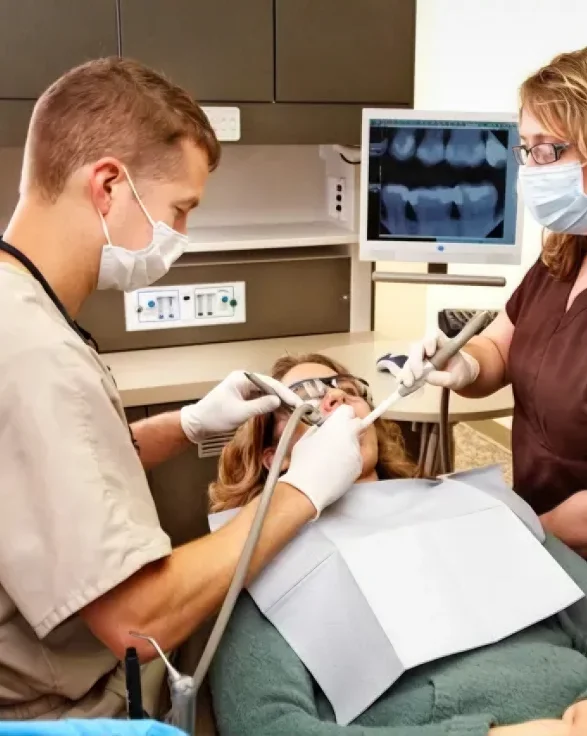
Our dentists examine the tooth and take digital X-rays to assess the roots, surrounding bone, and nearby structures.
Treatment Planning
We explain why the extraction is needed, discuss replacement options, and review your medical history and medications.
Numbing the Area
A local anesthetic is used to fully numb the tooth, gums, and surrounding tissue so you feel pressure but no pain.
Gentle Tooth Removal
The tooth is carefully loosened and removed. For surgical extractions, a small incision may be made, or the tooth may be sectioned into pieces for easier removal.
Protecting the Socket
We clean the area, place gauze to help a blood clot form, and add stitches if needed to support healing.
Aftercare Instructions
Our team reviews how to care for the extraction site, manage discomfort, and what to eat, and we schedule a follow-up if needed.
Benefits of Removing a Problem Tooth
When a tooth cannot be saved, extraction offers important benefits for your comfort and oral health:
- Relief from pain: Removing a severely damaged or infected tooth often brings immediate relief from ongoing discomfort.
- Stops the spread of infection: Extraction eliminates the source of infection before it can affect nearby teeth, bone, or your overall health.
- Protects neighboring teeth: Removing a crowded or failing tooth helps prevent damage to surrounding teeth and gums.
- Prepares for orthodontics: Creating space can help teeth align properly during braces or aligner treatment.
- Opens the door to replacement: Removing a failing tooth allows for a strong, lasting replacement such as an implant, bridge, or partial denture.
- Improves oral hygiene: Eliminating hard-to-clean, broken, or crowded teeth makes daily care easier.
Replacing a Missing Tooth After Extraction
Replacing an extracted tooth, especially a back tooth, is important for your long-term oral health. When a gap is left open, nearby teeth can shift, your bite can change, and the jawbone in that area can begin to shrink. Our team offers several tooth replacement options, including dental implants, dental bridges, and partial dentures. We will help you choose the solution that best fits your needs, budget, and goals, and we can often plan your replacement before your extraction takes place.
Insurance and Financing for Extractions
Most dental insurance plans provide coverage for tooth extractions, including surgical extractions when they are medically necessary. We accept a variety of insurance plans, and our team will review your benefits before treatment. For any remaining costs, or for tooth replacement treatment after your extraction, we offer CareCredit financing with flexible monthly payments.
Get Relief with Gentle Tooth Extractions
If a damaged or painful tooth is affecting your comfort, you do not have to wait. Our caring team at Clear Creek Dentistry will help you understand your options and make the extraction process as smooth and comfortable as possible. Call us or request an appointment online to schedule your visit.
Book Your Extraction AppointmentFrequently Asked Questions About Tooth Extractions
You should not feel pain during a tooth extraction because the area is fully numbed with local anesthetic. You may feel some pressure. Mild soreness afterward is normal and usually managed with over-the-counter pain relievers.
Most people recover from a simple extraction within a few days. Surgical extractions may take one to two weeks for the gums to heal, while the underlying bone continues to heal for several months.
Dry socket is a painful condition that can occur when the blood clot in the extraction site is dislodged or dissolves too early. Avoiding straws, smoking, and forceful spitting helps prevent it. Contact our office if you develop severe pain a few days after your extraction.
Stick to soft, cool foods for the first few days, such as yogurt, applesauce, smoothies (without a straw), mashed potatoes, eggs, and soup. Avoid hot, spicy, crunchy, or hard foods until the area heals.
Many patients return to work the next day after a simple extraction. For surgical extractions, you may want to rest for a day or two, especially if your job is physically demanding.
In most cases, yes. Replacing a missing tooth helps prevent shifting, bite problems, and bone loss. Options include dental implants, bridges, and partial dentures.
A simple extraction often takes just a few minutes once the area is numb. Surgical extractions may take longer, depending on the tooth’s position and complexity.
Most dental insurance plans cover extractions when they are necessary for your oral health. We accept a variety of insurance plans and offer CareCredit financing for any out-of-pocket costs.