
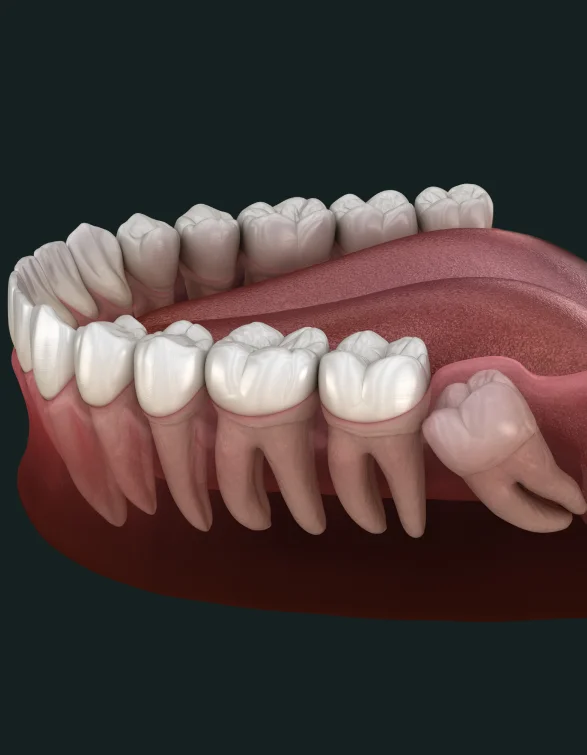
Signs Your Wisdom Teeth May Need to Come Out
Wisdom teeth do not always cause pain right away. Schedule an evaluation if you notice:
- Pain or pressure in the back of your mouth
- Red, swollen, or tender gums behind your last molars
- Jaw stiffness or difficulty opening your mouth fully
- Bad breath or an unpleasant taste that does not go away
- Food frequently getting stuck behind your back teeth
- Headaches or earaches linked to jaw pressure
- New crowding or shifting of your other teeth
- A wisdom tooth that has only partially broken through the gums
Benefits of Removing Wisdom Teeth
Proactive wisdom tooth removal can save you from discomfort and costly dental problems later:
- Prevents pain and infection: Removing problem wisdom teeth reduces the risk of painful infections like pericoronitis.
- Protects neighboring molars: Impacted wisdom teeth can damage the roots of nearby teeth or create hard-to-clean areas prone to decay.
- Reduces crowding concerns: Removal can help relieve pressure on the teeth in your dental arch.
- Lowers the risk of cysts: Impacted teeth can sometimes develop fluid-filled cysts that damage the jawbone.
- Improves oral hygiene: Eliminating hard-to-reach teeth makes brushing and flossing easier and more effective.
- Easier recovery when done early: Younger patients typically heal faster because the roots are not fully formed and the bone is less dense.
Your Wisdom Teeth Removal Appointment, Step by Step
Knowing what to expect can help you feel calm and prepared for your procedure:
Consultation and Imaging
We examine your mouth and take digital X-rays to evaluate the position, angle, and root development of your wisdom teeth.
Personalized Treatment Plan
Our dentists explain whether removal is recommended, which teeth need to come out, and what your recovery may look like.
Comfortable Numbing
A local anesthetic is used to fully numb the area so you feel pressure but no pain during the procedure. If you feel anxious, let us know so we can discuss ways to help you relax.
Careful Removal
Depending on the tooth’s position, a small incision may be made in the gum, and the tooth may be removed whole or in sections for a gentler extraction.
Cleaning and Closing the Site
We clean the socket, place stitches if needed, and apply gauze to help a healthy blood clot form.
Recovery Guidance and Follow—up
Our team reviews detailed aftercare instructions and schedules a follow-up to make sure you are healing well.
Who Should Consider Wisdom Teeth Removal?
You may be a good candidate for wisdom tooth extraction if you:
- Are a teen or young adult whose wisdom teeth are developing without enough room
- Have impacted or partially erupted wisdom teeth
- Experience pain, swelling, or recurring infections in the back of your mouth
- Have wisdom teeth that are decayed or damaged
- Are preparing for or have completed orthodontic treatment
- Have wisdom teeth that make it hard to clean your back molars
Not every wisdom tooth needs to be removed. If your wisdom teeth are healthy, fully erupted, properly aligned, and easy to clean, our dentists may simply recommend monitoring them at your regular checkups. For especially complex cases, we may coordinate care with a trusted oral surgeon.
Insurance and Financing for Wisdom Teeth Removal
Many dental insurance plans cover wisdom teeth extractions, particularly when the teeth are impacted or causing problems. We accept a variety of insurance plans, and our team will help you understand your coverage before treatment. We also offer CareCredit financing to make any out-of-pocket costs easier to manage.
Schedule Your Wisdom Teeth Consultation
Wisdom teeth problems tend to get worse with time, not better. Whether you are experiencing discomfort or want to plan ahead for your teen, our team at Clear Creek Dentistry is here to help. Call us or request an appointment online to schedule a wisdom teeth evaluation and find out if removal is right for you.
Book a Wisdom Teeth ConsultationFrequently Asked Questions About Wisdom Teeth Extractions
Wisdom teeth are often evaluated in the late teens and removed between the ages of 17 and 25, when roots are not fully developed and recovery is typically faster. The best timing depends on how your wisdom teeth are developing.
No. If your wisdom teeth are healthy, fully erupted, properly positioned, and easy to clean, they may not need removal. Our dentists will monitor them during regular checkups.
The area is fully numbed during the procedure, so you should feel pressure but no pain. Some soreness and swelling are normal afterward and can usually be managed with pain relievers and cold compresses.
Most patients feel much better within three to five days and are mostly healed within one to two weeks. Complete healing of the bone takes a few months.
Impacted wisdom teeth can lead to pain, infection, gum inflammation, decay, damage to nearby molars, and, in some cases, cysts in the jawbone.
Eat soft, cool foods like yogurt, applesauce, smoothies without a straw, mashed potatoes, scrambled eggs, and lukewarm soup. Avoid crunchy, spicy, and very hot foods until you heal.
Avoid straws, smoking, and forceful spitting for several days after surgery, and follow all aftercare instructions. These steps help protect the blood clot that forms in the socket.
Many dental insurance plans cover wisdom teeth extractions, especially when teeth are impacted or causing symptoms. We accept a variety of insurance plans and offer CareCredit financing.