
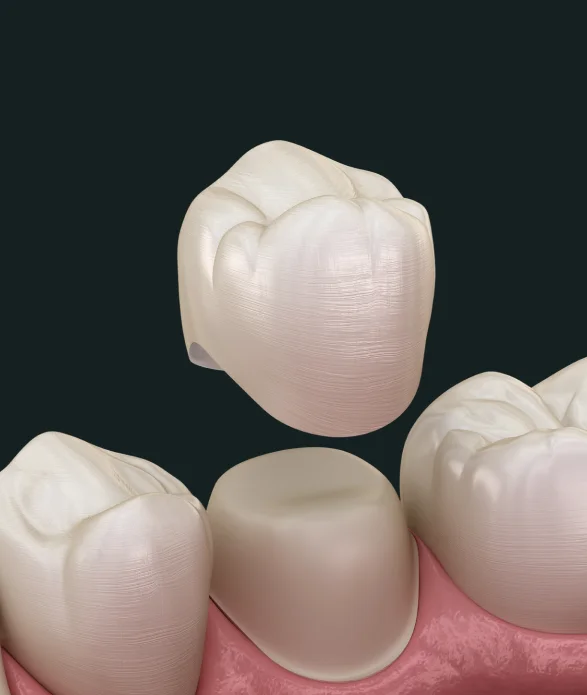
When a Dental Crown Is Recommended
Our dentists may recommend a crown to:
- Protect a tooth that is cracked, fractured, or at risk of breaking
- Restore a tooth with a large cavity that is too big for a filling
- Replace a large, worn, or failing filling
- Protect a tooth after root canal treatment
- Rebuild a tooth that is severely worn down from grinding or erosion
- Cover a tooth that is badly discolored or misshapen
- Anchor a dental bridge to replace missing teeth
- Top a dental implant to replace a single missing tooth
Benefits of Dental Crowns
Crowns offer both protective and cosmetic advantages:
- Stronger teeth: Crowns reinforce weak or damaged teeth so they can handle normal biting and chewing forces.
- Protection from further damage: Covering the tooth helps prevent cracks from spreading and decay from returning.
- Natural appearance: Tooth-colored crowns are shade-matched to blend in with your smile.
- Restored comfort: Crowns can relieve sensitivity and pain caused by cracked or damaged teeth.
- Long-lasting durability: With good care, crowns often last 10 to 15 years or longer.
- Saves natural teeth: A crown can help preserve a tooth that might otherwise need to be extracted.
- Improved bite function: Crowns restore the proper shape of the tooth for a balanced, comfortable bite.
Getting Your Dental Crown: What to Expect
Most dental crowns are completed in two visits. Here is how the process works:
Exam and Treatment Planning
Our dentists examine the tooth, take digital X-rays, and explain why a crown is recommended and which material is best.
Numbing and Tooth Preparation
After numbing the area, we gently reshape the tooth to make room for the crown and remove any decay or old filling material.
Impressions and Shade Matching
We take precise impressions of the prepared tooth and your bite, and carefully select a shade that matches your natural teeth.
Temporary Crown Placement
A temporary crown is placed to protect your tooth while your permanent crown is custom-made by a dental laboratory.
Permanent Crown Fitting
At your second visit, we remove the temporary, check the fit, color, and bite of your new crown, and make any necessary adjustments.
Final Cementation and Polish
Your permanent crown is securely bonded in place and polished for a smooth, natural finish.
How Long Do Dental Crowns Last?
Dental crowns typically last 10 to 15 years, and many last much longer with proper care. The lifespan of your crown depends on the material used, the location of the tooth, your oral hygiene, and habits like grinding, clenching, or chewing on hard objects. Regular checkups allow our team to monitor your crown and catch any wear or issues early.
Who Is a Candidate for a Dental Crown?
You may benefit from a crown if you:
- Have a cracked, chipped, or broken tooth
- Have a tooth with extensive decay or a large failing filling
- Recently had or need a root canal on a back tooth
- Have teeth that are worn down from grinding or acid erosion
- Want to improve a tooth that is discolored or misshapen and cannot be corrected with whitening or bonding
- Need a bridge or implant restoration to replace a missing tooth
Before placing a crown, our dentists make sure the tooth and surrounding gums are healthy. If there is infection inside the tooth, a root canal may be needed first.
Insurance and Financing for Dental Crowns
Most dental insurance plans provide partial coverage for crowns when they are needed to restore a damaged or decayed tooth. We accept a variety of insurance plans, and our team will review your benefits before treatment so you know what to expect. We also offer CareCredit financing to help make your care easier to fit into your budget.
Protect Your Tooth with a Custom Crown
A damaged tooth only gets weaker over time. With a custom dental crown from Clear Creek Dentistry, you can restore your tooth’s strength and enjoy a smile that looks and feels natural. Call us or request an appointment online to schedule your crown consultation.
Book Your Crown AppointmentFrequently Asked Questions About Dental Crowns
A dental crown is a custom-made cap that covers the entire visible part of a tooth. It restores the tooth’s shape, size, strength, and appearance, and protects it from further damage.
Getting a crown should not be painful. The area is numbed with local anesthetic before the tooth is prepared. Mild sensitivity or gum tenderness for a few days afterward is normal.
Most dental crowns last 10 to 15 years, and many last even longer with good oral hygiene, regular dental visits, and by avoiding habits like chewing on hard objects.
Traditional crowns usually require two visits about two to three weeks apart. The first visit prepares the tooth and places a temporary crown, and the second visit places the permanent crown.
Yes. The crown itself cannot decay, but the natural tooth underneath can develop a cavity at the edge of the crown near the gumline. Brushing, flossing, and regular checkups help prevent this.
Yes. Porcelain, ceramic, and zirconia crowns are shade-matched to your natural teeth, so they blend seamlessly into your smile.
After a root canal, teeth, especially back teeth, can become more brittle and prone to breaking. A crown protects the treated tooth and restores its strength for normal chewing.
Most dental insurance plans cover part of the cost of a crown when it is medically necessary. We accept a variety of insurance plans and offer CareCredit financing for any remaining costs.