
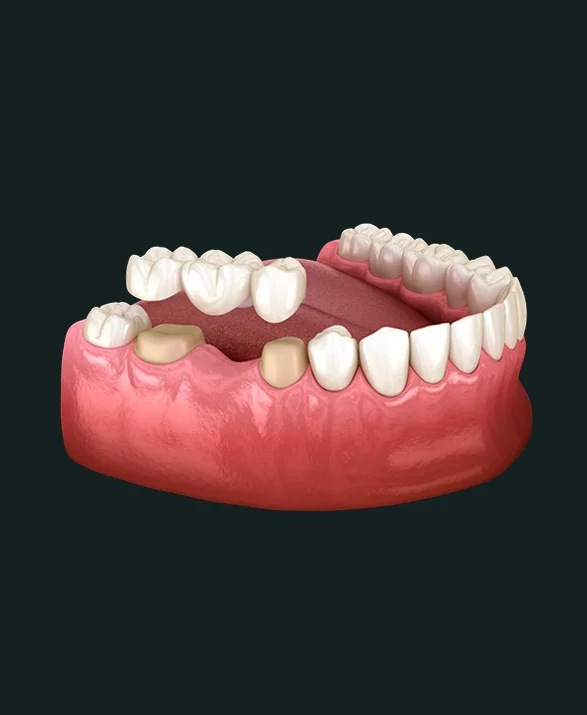
Types of Dental Bridges
The right type of bridge depends on the location of the missing teeth and the health of the surrounding teeth:
- Traditional bridges: The most common type. Crowns are placed on the natural teeth on both sides of the gap, holding one or more replacement teeth in between.
- Cantilever bridges: Supported by a crown on only one side of the gap, often used when there is a healthy tooth on just one side.
- Maryland bonded bridges: Use a thin metal or porcelain framework bonded to the backs of neighboring teeth, requiring minimal alteration to natural teeth. Often used for front teeth.
- Implant-supported bridges: Anchored to dental implants instead of natural teeth, ideal for replacing several missing teeth in a row while protecting the jawbone.
Benefits of a Dental Bridge
A custom dental bridge offers lasting improvements to both your smile and your oral health:
- Restores your smile: Fills visible gaps with natural-looking replacement teeth.
- Improves chewing and speaking: Replacing missing teeth helps you eat comfortably and pronounce words clearly.
- Prevents teeth from shifting: Bridges hold neighboring teeth in position, protecting your bite alignment.
- Distributes bite forces evenly: Replacing missing teeth reduces excess strain on your remaining teeth.
- Maintains facial shape: Filling gaps helps support your lips and cheeks for a fuller, more youthful look.
- Fixed and secure: Unlike removable partials, bridges stay in place and feel like natural teeth.
- Relatively quick treatment: Most traditional bridges are completed in just two visits.
How We Create and Place Your Dental Bridge
A traditional dental bridge is usually completed in two appointments. Here is what to expect:
Consultation and Exam
Our dentists evaluate the gap, the neighboring teeth, and your gums, and take digital X-rays to plan your bridge.
Preparing the Anchor Teeth
After numbing the area, the teeth on either side of the gap are gently reshaped to make room for the supporting crowns.
Impressions and Shade Matching
We take precise impressions of your teeth and bite and select a shade that blends with your natural smile.
Temporary Bridge
A temporary bridge is placed to protect your prepared teeth and fill the gap while your custom bridge is crafted in a dental laboratory.
Fitting Your Permanent Bridge
At your second visit, we remove the temporary bridge and check the fit, color, and bite of your new bridge, making adjustments as needed.
Final Bonding and Follow—up
Your bridge is permanently cemented in place, polished, and checked for comfort. We schedule a follow-up to make sure everything feels right.
What Happens When a Missing Tooth Is Not Replaced
Leaving a gap untreated can cause a chain reaction of dental problems:
- Neighboring teeth may drift, tilt, or rotate into the empty space
- The opposing tooth can over-erupt, shifting out of its socket
- Bite problems can develop, leading to jaw pain or TMJ discomfort
- Food traps in shifted teeth can increase the risk of decay and gum disease
- The jawbone in the area can begin to shrink without the stimulation of a tooth root
- Your face may begin to look sunken if multiple teeth are missing
Replacing missing teeth promptly helps protect your remaining teeth and keep your smile healthy.
Who Is a Good Candidate for a Dental Bridge?
A dental bridge may be the right option if you:
- Are missing one or more teeth in a row
- Have healthy, strong teeth on either side of the gap, or are a candidate for implants to support the bridge
- Have healthy gums and good overall oral health
- Want a fixed tooth replacement that does not need to be removed
- Prefer a faster treatment timeline than some implant options
- Are committed to good oral hygiene, including cleaning under the bridge
If the neighboring teeth already have large fillings or need crowns, a bridge can restore those teeth and replace the missing tooth in a single treatment. Our dentists will review all your options, including implants and partial dentures, to help you choose the best fit.
Insurance and Financing for Dental Bridges
Many dental insurance plans provide partial coverage for dental bridges as a major restorative service. We accept a variety of insurance plans, and our team will help you understand your benefits before treatment begins. For any out-of-pocket costs, we offer CareCredit financing with flexible monthly payment options.
Complete Your Smile with a Dental Bridge
You do not have to live with gaps in your smile or the problems they can cause. A custom dental bridge from Clear Creek Dentistry can restore your smile’s appearance and function with natural-looking, long-lasting results. Call us or request an appointment online to schedule your consultation.
Schedule a Bridge ConsultationFrequently Asked Questions About Dental Bridges
A dental bridge is a fixed restoration that replaces one or more missing teeth. It uses crowns on neighboring teeth or dental implants to hold artificial replacement teeth in place.
Dental bridges typically last 10 to 15 years or longer with good oral hygiene, healthy supporting teeth, and regular dental checkups.
The procedure is performed with local anesthetic, so you should feel little to no discomfort. Mild sensitivity or gum tenderness for a few days afterward is normal.
A traditional bridge usually replaces one to three missing teeth in a row. Implant-supported bridges can replace several teeth in a row without relying on natural teeth for support.
Yes. Once your permanent bridge is placed, you can eat most foods normally. Avoid very hard or sticky foods that could damage the bridge, and cut tough foods into smaller pieces.
Use a floss threader, super floss, interdental brush, or water flosser to clean under the replacement tooth every day. Regular professional cleanings also help keep your bridge and gums healthy.
Most traditional bridges are completed in two visits spaced about two to three weeks apart. Implant-supported bridges take longer because the implants need time to heal first.
Many dental insurance plans cover part of the cost of a dental bridge. We accept a variety of insurance plans and offer CareCredit financing for any remaining costs.