
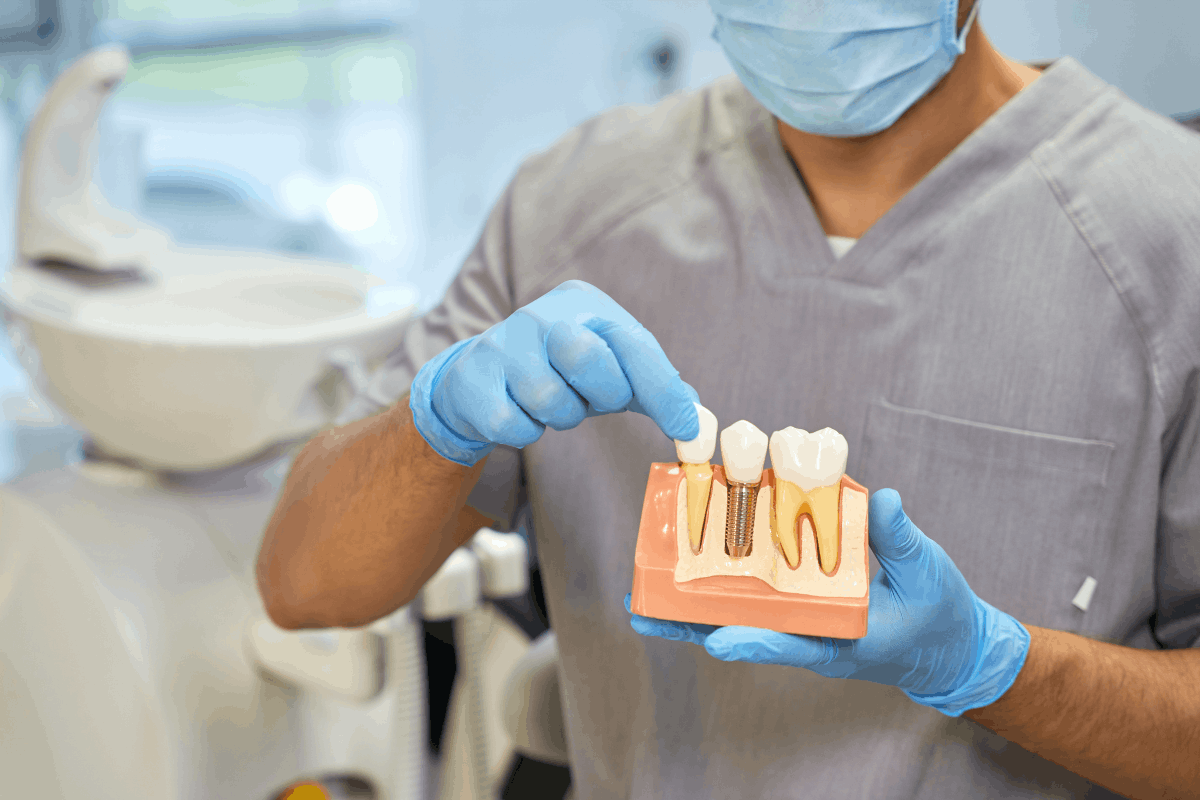
Missing teeth can affect your ability to chew comfortably, speak clearly, and feel confident about your smile. Fortunately, modern tooth replacement options can help restore both function and appearance. Among these options, dental implants provide a stable foundation for replacement teeth and can be a long-term solution for patients who meet the treatment requirements.
At Clear Creek Dentistry in Silverdale, WA, patients can explore dental implant options based on their oral health, the number of missing teeth, and their individual goals. Understanding how dental implants work, what the treatment involves, and how to care for them can help you decide whether this option is right for you.
What Are Dental Implants?
Dental implants are small posts, commonly made of titanium, that are placed in the jawbone to replace missing tooth roots. After placement, the implant can integrate with the surrounding bone, creating a foundation for a replacement tooth or teeth.
Depending on your needs, dental implants may support a single dental crown, an implant-supported bridge, or a full-arch restoration. The recommended approach depends on how many teeth are missing, the condition of your jawbone, and your overall oral health.
Unlike traditional removable dentures, many implant-supported restorations are designed to remain securely in place during everyday activities.
What Are the Benefits of Dental Implants?
Dental implants offer several potential benefits for suitable candidates.
Improved chewing function: A stable replacement tooth can help you chew a wider variety of foods more comfortably.
Natural-looking results: The final restoration is designed to complement your smile and surrounding teeth.
Support for jawbone health: Tooth loss can contribute to bone loss in the affected area. Implants can help stimulate the jawbone where they are placed.
A stable tooth replacement: Implant-supported restorations can provide stability without relying on neighboring natural teeth in the same way as some traditional bridges.
Versatility: Dental implants can replace one missing tooth, several teeth, or support a full-arch restoration.
The results and benefits vary according to individual oral health, the type of restoration, and ongoing maintenance.
Who Is a Good Candidate for Dental Implants?
Dental implants may be an option for adults who have lost one or more teeth and want a stable replacement solution. However, not everyone is immediately ready for implant treatment.
During an evaluation, your dental team may assess:
- The health of your teeth and gums
- Jawbone volume and density
- Your medical and dental history
- Your oral hygiene habits
- The location and number of missing teeth
- Whether additional procedures may be necessary
Patients with insufficient jawbone may need a bone graft or another preparatory procedure. Gum disease and other oral health concerns may also need to be addressed before implant placement.
A personalized consultation can help determine whether dental implants are appropriate for your situation and which treatment options are available.
What Is the Dental Implant Procedure?
Dental implant treatment generally involves several stages. The timeline varies depending on your oral health, healing, and whether additional procedures are needed.
1. Initial Consultation
The first step is an evaluation of your oral health and tooth replacement needs. Your dental team may recommend diagnostic imaging to examine your jawbone and plan the implant placement.
This appointment is also an opportunity to discuss your goals, treatment options, expected timeline, and costs.
2. Implant Placement
If you are a suitable candidate, the implant post is placed in the planned location in your jawbone. The procedure and appropriate comfort measures will be discussed before treatment begins.
3. Healing and Bone Integration
Following placement, the implant needs time to heal and integrate with the surrounding bone. This process helps create the stability needed to support the final restoration.
Healing time differs from patient to patient, and some cases require additional treatment before the next stage.
4. Placement of the Replacement Tooth
Once the implant is ready, a custom restoration is attached. Depending on your treatment plan, this may be a crown, bridge, or full-arch restoration designed to restore function and appearance.
Your dental team will explain each stage and provide instructions for caring for the implant throughout the process.
How Do Dental Implants Compare With Dentures and Bridges?
Dental implants, traditional bridges, and dentures can all help replace missing teeth, but they work differently.
- Dental implants: Placed in the jawbone and used to support replacement teeth.
- Dental bridges: Replace missing teeth by using neighboring teeth or other supporting structures, depending on the design.
- Dentures: Removable appliances used to replace several missing teeth or an entire set of teeth.
The best choice depends on your oral health, the number of missing teeth, your preferences, treatment timeline, and budget. Your dental team can explain the advantages and limitations of each option to help you make an informed decision.
How Should You Care for Dental Implants?
Dental implants require regular care even though the implant itself is not a natural tooth. Plaque can collect around the restoration, and the surrounding gums need to remain healthy.
To help maintain your results:
- Brush twice daily with a soft-bristled toothbrush.
- Clean between your teeth and around the implant restoration every day.
- Attend regular dental checkups and professional cleanings.
- Avoid biting extremely hard objects that could damage the restoration.
- Contact your dental team if you notice persistent swelling, bleeding, discomfort, or a loose restoration.
Your dental team may recommend specific cleaning tools based on the type of implant-supported restoration you have.
Are Dental Implants a Long-Term Solution?
Dental implants are designed to provide long-term tooth replacement, but their longevity is not guaranteed. Their condition depends on several factors, including oral hygiene, gum health, general health, bite forces, and regular professional monitoring.
The implant and the restoration it supports may also have different maintenance or replacement needs over time. Following your personalized care instructions and attending routine appointments can help protect your oral health and identify concerns early.
Explore Dental Implants at Clear Creek Dentistry
If you are missing teeth and considering a replacement option, dental implants may help restore chewing function and the appearance of your smile. The first step is understanding your oral health and determining which treatment best fits your needs.
Clear Creek Dentistry offers dental implant evaluations for patients in Silverdale, WA. The team can discuss your tooth replacement goals, assess your suitability for treatment, and explain the options available for your situation.
Visit our dental implants page to learn more, or schedule a consultation.
Frequently Asked Questions
1. How long do dental implants last?
Dental implants are designed for long-term use, but their longevity varies. Oral hygiene, gum health, general health, bite forces, and regular dental monitoring can all affect their long-term condition.
2. Are dental implants painful?
Implant placement is performed with appropriate anesthesia to manage discomfort during the procedure. Some soreness or swelling afterward is common, but recovery varies by patient. Your dental team will provide instructions for managing discomfort and healing.
3. How long does dental implant treatment take?
Treatment may take several months because the implant often needs time to integrate with the jawbone before the final restoration is attached. The overall timeline depends on healing, bone health, and whether additional procedures are needed.
4. Can dental implants replace multiple missing teeth?
Yes. Depending on your oral health and treatment plan, dental implants may support individual crowns, bridges, or full-arch restorations. Your dental team can explain which option is suitable for your needs.
5. Are dental implants better than dentures?
Neither option is best for everyone. Dental implants can provide fixed support for replacement teeth, while dentures may be removable and may suit different clinical or financial circumstances. Your oral health, preferences, and treatment goals help determine the most appropriate option.
6. How do I care for dental implants?
Brush twice daily, clean between your teeth and around the implant restoration, and attend regular dental checkups. Follow your dental team’s specific instructions for cleaning and monitoring your restoration.
7. Can anyone get dental implants?
Not everyone is immediately eligible. Your dental team will evaluate your gums, jawbone, medical history, and overall oral health. Some patients may need preliminary treatment before implant placement can be considered.
Recent Posts
Dental Implants in Silverdale: What Happens to the Teeth Around a Missing Tooth?
Losing one tooth can seem like a small problem, especially if the missing tooth is toward the back of your mouth. But a gap can affect more than appearance. Over time, the teeth around an empty space may shift, your bite can change, and the bone that once supported the missing tooth can gradually lose volume. For patients considering dental ...
Do You Need to Worry About Cavities with Dental Implants?
Replacing a missing tooth can feel like a fresh start. You can smile confidently, enjoy your favorite foods again, and stop worrying about gaps in your smile. But once your implant treatment is complete, a common question arises: can dental implants get cavities? The short answer is no. An implant cannot develop a cavity the way a natural tooth can. ...
Are Dental Implants Safe for Smokers? Key Facts to Consider
Dental implants are one of the most reliable ways to replace missing teeth, offering long-term strength, function, and a natural look. But if you smoke, the journey to a successful implant may come with extra challenges. Smoking doesn’t automatically disqualify you from getting dental implants, but it does increase the risk of complications. Understanding these risks can help you make ...

Dental Implants vs. Bridges: What’s the Better Choice?
When you’re facing tooth loss due to injury, decay, or gum disease, choosing the right replacement option is an important decision. Modern dentistry gives you two of the most common options: dental bridges and dental implants. While both treatments effectively replace missing teeth, they differ significantly in how they work and what they offer in the long term. In this ...
Recent Posts
Dental Implants: A Guide to Replacing Missing Teeth
Missing teeth can affect your ability to chew comfortably, speak clearly, and feel confident about your smile. Fortunately, modern tooth replacement options can help restore both function and appearance. Among these options, dental implants provide a stable foundation for replacement teeth and can be a long-term solution for patients who meet the treatment requirements. At Clear Creek Dentistry in Silverdale,
How to Choose a Dentist in Silverdale, WA
Finding a dental practice you feel comfortable visiting is an important part of maintaining your oral health. Whether you need a routine checkup, want to address a dental concern, or are exploring treatment options, choosing the right dentist can make it easier to stay consistent with your care. For individuals and families in Silverdale, WA, understanding what to look for