
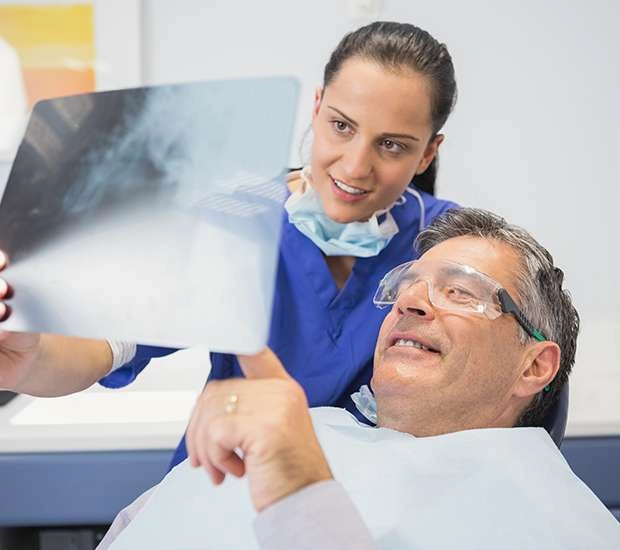
Dental Implant Surgery
Silverdale, WAAt Clear Creek Dentistry, we can provide you with dental implant surgery to replace your missing tooth. Even with the improvements of oral health care, the majority of adults still lose at least one tooth during their lifetime. Whether this is due to old age, an accident, or gum disease, we have the most durable solution for replacing your teeth. This is the only procedure that replaces both your lost root and tooth, since dentures and dental bridges only replace the visible portion of your tooth. In order to place implants, we must conduct dental implant surgery. During the surgery, we will insert a titanium post under the gums and secure it to the jawbone. The bone and metal will fuse together through the process of osseointegration, creating a durable root system to attach your new tooth (crown). If you are considering this procedure, we encourage you to call (360) 692-6332 to schedule a consultation with our Silverdale dental office.
Dental Implant Surgery: What to Expect From the Actual Procedure
On the day you visit our Washington dental office for surgery, you will be given anesthesia so you will not feel anything while we place the implant. The procedure itself can take anywhere from 30 minutes for a single implant to several hours. If you are replacing multiple teeth with implants, we will let you know how long the process will take and whether or not it will take two appointments.
Post-Operation Care for Dental Implants
Since dental implant surgery is an invasive process, you can expect to have some swelling and sensitivity after the fact. While perfectly natural, you must take good care of your mouth in order to prevent an infection or unnecessary irritation. We suggest taking ibuprofen to decrease swelling and manage discomfort. You can also use an icepack or cold compress for 15 minutes at a time. At Clear Creek Dentistry, we generally recommend taking a couple of days off work while you are recovering. After two to five days, you will feel normal again; though your gums may remain slightly sensitive for a little longer.
Dental Implant Recovery FAQ
Here are a few questions we are regularly asked in our dental office.
Q. What can I eat after oral surgery?
A. We recommend you eat foods that are soft and easy to chew or that require no chewing at all. A perfect example would be yogurt, warm soup, ice cream, smoothies, and steamed vegetables. We can provide you with a more detailed list during a consultation. Also be sure to avoid foods that are difficult to chew, like steak, or things that are sharp, like tortilla chips, since they can further irritate your gum tissue.
Q. How long before I am back to normal?
A. Most patients report feeling normal within a week of dental implant surgery. The first couple of days will be the most uncomfortable, but every day you should feel slightly better. Ibuprofen or Tylenol can usually be enough to increase your comfort.
Q. Is there any pain after dental implant surgery?
A. When you visit our dental office, we will discuss pain management with you. We will give you anesthesia during the actual procedure so you can relax and feel comfortable during the entire process. Afterward, you can take over-the-counter medication to manage your pain. By following the directions, you will remain fairly comfortable. The key is to stay ahead of your discomfort, so if the bottle says that you can take two pills every four hours – take them every four hours. As long as you do so, you will be able to go through your day without any severe discomfort.
Q. Will my new tooth be attached right away?
A. When you come in for a consultation, we can provide you with a good idea of when we can attach your new tooth. For the most part, we wait until the process of osseointegration takes place and the titanium post integrates into the jawbone. This provides the most durable base to attach your new crown to. Typically, this process can take anywhere from three to six months to complete. However, there are other options we can explore if you are on a tight timeframe. To ensure your smile is intact while you wait, we can provide you with a temporary denture to wear. We will attach the denture using wires, similar to a retainer. You can remove the denture whenever you want to. This way, your smile will appear intact until we are ready to secure your new tooth (crown) in place. We will schedule you for a follow up visit to inspect your implant and give you a better idea of how the healing process is going at that time.
Q. Can dental implants replace my dentures?
A. Yes, at Clear Creek Dentistry, we place implants on a regular basis. Patients who are tired of wearing removable dentures and want something more permanent can benefit from dental implants. Since dentures can easily slip out of place, switching to implants can make it easier to eat, speak, and engage in normal daily activities. If you have worn dentures for some time, you may be suffering from resorption. If this is the case, your jawbone may not have sufficient density to support an implant. When this happens, we may recommend a bone graft prior to beginning. To discuss this further, call (360) 692-6332 and schedule an examination. After physically examining your teeth and taking X-rays, we can create a full treatment plan for you.
Q. Dental Implant Surgery - What to Expect From Your Consultation
A. Before you can begin, we need to examine you and take X-rays to determine the density of your jawbone. This appointment will be non-invasive and comfortable. We can present you with all of the options available to you and discuss the ins and outs of each treatment solution. This will allow you to ask questions and select the option that is best for you. To begin, call our Silverdale dental office at (360) 692-6332.
Questions Answered on This Page
People Also Ask
Definition of Dental Implant Terminology
- Abutment
An abutment is a component that attaches to the dental implant so a professional can place a dental crown to provide patients with an artificial, aesthetically pleasing and fully-functional smile. - Bridge
Multiple replacement teeth that are fixed in place via attachment to dental implants, natural adjacent teeth, or a combination of the two. - Dental Crown
A crown is an artificial tooth, usually consisting of porcelain, which covers the top of the implant to provide people with an aesthetically pleasing and fully-functional tooth. - Dental Implant
A dental implant is an artificial tooth root that is placed into your jaw to hold a replacement tooth or bridge. Dental implants may be an option for people who have lost a tooth or teeth due to periodontal disease, an injury, or some other reason. - Endosteal (endosseous)
Endosteal is a type of dental implant that a professional places in the alveolar and basal bone of the mandible that transcends only one cortical plate. - Eposteal (subperiosteal)
Eposteal is a type of dental implant that conforms to whichever edentulous surface of an alveolar bone is superior. - Implant-Supported Bridge
An implant-supported bridge is a dental bridge that professionals fix in place with the use of dental implants inserted in the jaw to create a sturdy set of artificial teeth. - Osseointegration
Osseointegration is the process in which a titanium dental implant fuses with the surrounding bone over several months after an oral health professional places the implant in the jaw. - Periodontal
Literally “around the tooth” - Resorption
Resorption is the process in which the body absorbs the calcium from the jaw since there are no tooth roots to cause the necessary stimulation and proceeds to use the calcium in other areas. - Transosteal (transosseous)
Transosteal is a type of dental implant that includes threaded posts which penetrate the superior and inferior cortical bone plates of the jaw.
Helpful Related Links
- American Dental Association (ADA). Glossary of Dental Terms. 2015
- American Academy of Cosmetic Dentistry® (AACD). Home Page. 2015
- WebMD. WebMD’s Oral Care Guide. 2015
About our business, license, and website security
- Clear Creek Dentistry was established in 2008.
- We accept the following payment methods: American Express, Cash, Check, Discover, MasterCard, and Visa.
- We serve patients from the following counties: Kitsap County.
- We serve patients from the following cities: Silverdale, Poulsbo, Bremerton, Port Orchard, Kingston, and Bainbridge Island.
- Norton Safe Web. View Details
- Trend Micro Site Safety Center. View Details
Back to top of Dental Implant Surgery
Related Topics
- Am I a Candidate for Implants
- Dental Implant Restoration
- Dental Implant Surgery
- Implant Supported Dentures
- Options for Replacing Missing Teeth
- Post-Op Care for Dental Implants
- Questions to Ask at Your Dental Implants Consultation
- The Dental Implant Procedure
- Will I Need a Bone Graft for Dental Implants
Recent Posts
[recent_custom_posts cat="family-dentist-cat"]