The Dental Implant Procedure
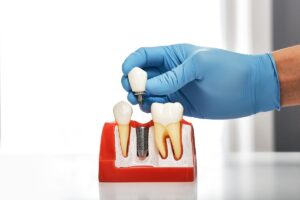
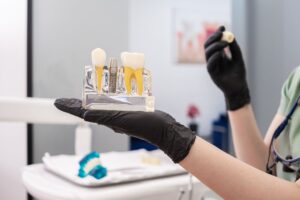
Silverdale, WALosing one or more teeth can be devastating and life-changing, but dental implants allow you to restore full dental functions and the appearance of your smile. They offer a more natural tooth replacement option than other tooth replacement options. The dental implant procedure involves the insertion of metal, screw-like posts into the jawbone to replace the root of the lost tooth, and provide support for an artificial tooth.
The dental implant procedure is available at Clear Creek Dentistry in Silverdale and the surrounding area. To get dental implants, you must be in good health and have healthy and adequate bone density. Contact our office at (360) 692-6332 for a consultation.
Dental Implant Procedure
Initial Consultation
The first stage entails a meeting with the dentist for a consultation. During this meeting, the dentist will perform a comprehensive evaluation, including x-rays, CT scans, oral exams, and dental impressions, to determine the patient's eligibility for dental implants and prepare them for the procedure. The x-rays and 3D scans show the condition of the jawbone.
The dentist will need to know the patient's medical history, every medication they currently use, including supplements, prescription, and over-the-counter meds. Patients who have health conditions may receive antibiotics ahead of the procedure to prevent infection. If any oral condition is present, patients will need to undergo treatment before getting dental implants.
Afterward, the dentist will discuss the treatment plan with the patient, including the timeline, the different stages, and aftercare instructions. If a bone graft is necessary (to augment the volume of the jawbone), the dentist will inform the patient. The treatment plan considers the number of missing teeth and the condition of existing teeth and jawbone. If the patient suffers from dental anxiety, the dentist will take necessary measures to keep the patient as comfortable throughout the procedure.
During the initial consultation, patients will be able to discuss their fears and concerns with the dentist. You can ask about the risks of infection, implant rejection, potential allergies, and possible nerve damage. For clarification, you can also ask the dentist about measures to take to ensure the long-term success of the dental implants. The essence of the initial consultation is for patients to get all the information they need before proceeding with the treatment.
Preparing for Dental Implant Procedure
Ahead of the implant placement, patients can do the following to make the process as seamless as possible:
- Use any prescribed antibiotics.
- Clean your mouth with an antibacterial dental rinse.
- Arrange for transportation home after the procedure as you may not be fit to drive.
- Clear your schedule for the day. While you may not be in pain after the procedure, resting afterward will provide need relief.
- Prepare soft foods ahead so you will not have to worry about making foods after the procedure. Great food options include soups, smoothies, and pasta.
- Take headphones along so you can listen to your favorite music. This will serve as a distraction throughout the process.
Placing the Dental Implant
During the procedure, the dentist will make an incision over the gums to reveal the bone. They will put the implant post at the site of the lost tooth. Although every patient is different, most people discover that the discomfort is less than they anticipated. Over-the-counter painkillers are usually enough to manage pain after the procedure.
After the implant placement, there will be a gap at the site of tooth loss. The dentist may place a temporary implant for cosmetic purposes, if necessary. Osseointegration starts immediately and could take several months because the jawbone must integrate with the dental implant to serve as a sturdy foundation of the new artificial tooth.
Placing the Abutment
How to Choose the New Artificial Teeth
After the gums heal, the dentist will take additional impressions of the teeth and oral cavity, which will be used to fabricate the new artificial tooth. Patients can decide between fixed and removable tooth prostheses. Removable artificial teeth attach to a metal frame held by the abutment and snap firmly into place. It can be removed easily for routine cleaning and repairs.
A fixed dental prosthesis is screwed or cemented permanently onto the abutment. The prosthesis can only be taken out by a dentist.
Aftercare and Recovery
After the procedure, patients may need to use pain meds and antibiotics to relieve pain and fight infections. If discomfort, swelling, or other symptoms worsen following the procedure, the patient needs to contact the dentist as soon as possible. Until the stitches heal, it is advisable to stick to a diet of soft foods.
Excellent oral hygiene is essential to prolong the lifetime of dental restoration. This includes brushing and flossing regularly, going to the dentist for cleaning and checkup, and avoiding harmful oral habits such as smoking or chewing hard substances.
In Conclusion
Dental implants help to prevent the resorption of osseous tissues by providing the stimulation needed to keep the jawbone alive and healthy. By filling the gap left by a lost tooth, implants prevent other teeth from shifting out of place.
The dental implant procedure is safe, but like any other dental procedure, it has its risks. Typically, dental implants have a success rate of up to 95 percent, but the success depends on factors such as the patient, the dentist, the techniques used, and the number of implants involved. When done by an experienced dentist, the risks of the procedure are minimal.
To learn more about the dental implant procedure, call our office at (360) 692-6332 to request an appointment.
The Dental Implant Procedure FAQ
Q. Is the dental implant procedure painful?
Q. Will dental implants function like my natural teeth?
Q. How long does a dental implant procedure Take?
Q. Am I eligible for dental implants?
Questions Answered on This Page
People Also Ask
Definition of Dental Implant Terminology
- Abutment
An abutment is a component that attaches to the dental implant so a professional can place a dental crown to provide patients with an artificial, aesthetically pleasing and fully-functional smile. - Bridge
Multiple replacement teeth that are fixed in place via attachment to dental implants, natural adjacent teeth, or a combination of the two. - Dental Crown
A crown is an artificial tooth, usually consisting of porcelain, which covers the top of the implant to provide people with an aesthetically pleasing and fully-functional tooth. - Dental Implant
A dental implant is an artificial tooth root that is placed into your jaw to hold a replacement tooth or bridge. Dental implants may be an option for people who have lost a tooth or teeth due to periodontal disease, an injury, or some other reason. - Endosteal (endosseous)
Endosteal is a type of dental implant that a professional places in the alveolar and basal bone of the mandible that transcends only one cortical plate. - Eposteal (subperiosteal)
Eposteal is a type of dental implant that conforms to whichever edentulous surface of an alveolar bone is superior. - Implant-Supported Bridge
An implant-supported bridge is a dental bridge that professionals fix in place with the use of dental implants inserted in the jaw to create a sturdy set of artificial teeth. - Osseointegration
Osseointegration is the process in which a titanium dental implant fuses with the surrounding bone over several months after an oral health professional places the implant in the jaw. - Periodontal
Literally “around the tooth” - Resorption
Resorption is the process in which the body absorbs the calcium from the jaw since there are no tooth roots to cause the necessary stimulation and proceeds to use the calcium in other areas. - Transosteal (transosseous)
Transosteal is a type of dental implant that includes threaded posts which penetrate the superior and inferior cortical bone plates of the jaw.
Helpful Related Links
- American Dental Association (ADA). Glossary of Dental Terms. 2015
- American Academy of Cosmetic Dentistry® (AACD). Home Page. 2015
- WebMD. WebMD’s Oral Care Guide. 2015
About our business, license, and website security
- Clear Creek Dentistry was established in 2008.
- We accept the following payment methods: American Express, Cash, Check, Discover, MasterCard, and Visa.
- We serve patients from the following counties: Kitsap County.
- We serve patients from the following cities: Silverdale, Poulsbo, Bremerton, Port Orchard, Kingston, and Bainbridge Island.
- Norton Safe Web. View Details
- Trend Micro Site Safety Center. View Details
Related Topics
Recent Posts
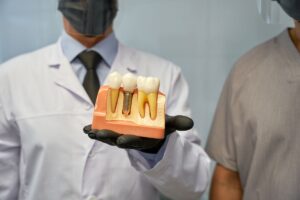
Do You Need to Worry About Cavities with Dental Implants?
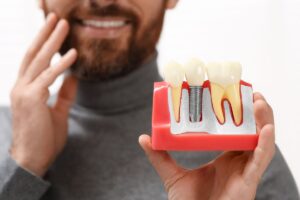
Are Dental Implants Safe for Smokers? Key Facts to Consider
Dental Implants vs. Bridges: What’s the Better Choice?